%201%20(1).svg)


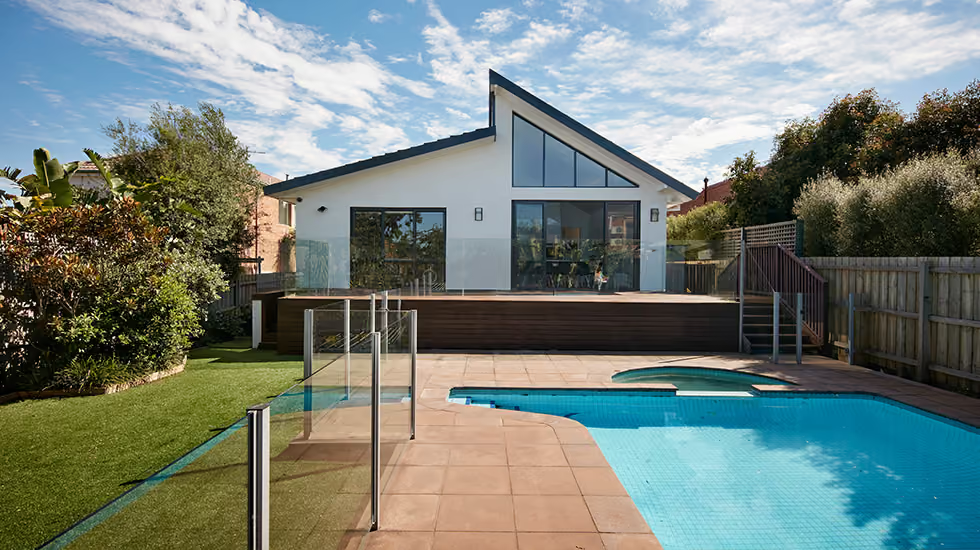
Table of contents

If you love where you live but need more space, adding an extension to your house can be a smart move. Not only does it improve how your home functions day to day, but it can also significantly increase your property value.
For many homeowners, extending costs less than moving. It also allows you to create a layout that suits your lifestyle, rather than adapting to someone else’s home. When planned well, a home extension delivers both everyday comfort and long-term financial return.
Why homeowners choose to add an extension for value
Homeowners often reach a point where their current home no longer fits their lifestyle. Instead of moving, many choose a home extension to improve comfort while increasing property value.
In Australia, research shows that adding usable living space can boost a home’s value by up to 20%, and in some cases even higher, depending on the design and market demand. More substantial additions, like self-contained spaces, have been shown to increase value by as much as 30%.
Extending your home gives you the flexibility to redesign your space around your needs. Whether it’s creating open-plan living areas, adding bedrooms or improving flow between indoor and outdoor spaces, the result is a home that works better every day.
At the same time, these improvements make your property more appealing to future buyers. Homes with modern layouts and functional living spaces tend to attract stronger interest and higher resale prices.
This combination of lifestyle benefits and long-term value is what makes a home extension such a popular renovation decision.
How a home extension improves everyday living and functionality
A well-designed home extension does more than add new space. It improves how your entire home works. By rethinking your floor plan and upgrading key areas, you can create a more functional, comfortable and efficient family home.
Whether you're building a home extension onto your existing structure or adding a second storey, the goal is to make better use of space. A good extension project connects seamlessly with the original house, improving flow while maintaining structural integrity.
When planned properly with an experienced builder, your extension can transform both everyday living and long-term property value.
Here’s how a home extension improves functionality:
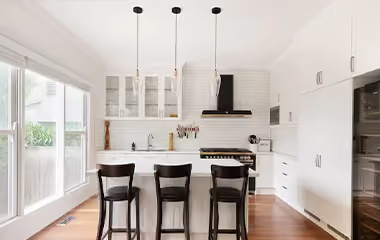
- Creates more usable living space: Add open-plan living areas, a larger kitchen or new zones for relaxing and entertaining.
- Improves your floor plan layout: Remove awkward spaces and redesign your home to flow more naturally from room to room.
- Adds essential rooms: Adding a bedroom, ensuite, or extra bathroom helps growing families stay comfortable without needing to move.
- Increases natural light and ventilation: Smart design choices bring in more light and improve airflow, making your home feel bigger and more inviting.
- Enhances storage and organisation: Walk-in robes, a pantry or built-in storage help you use space wisely and reduce clutter.
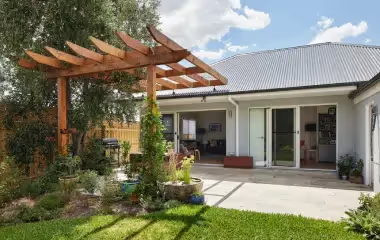
- Connects indoor and outdoor areas: Features such as an alfresco area create a seamless link between indoor and outdoor living.
- Upgrades comfort and efficiency: Modern insulation, waterproofing and construction methods improve energy performance and durability.
- Supports long-term flexibility: Whether you plan to sell or stay put, a flexible layout adapts to changing needs over time.
What adds value to your house when building an extension?
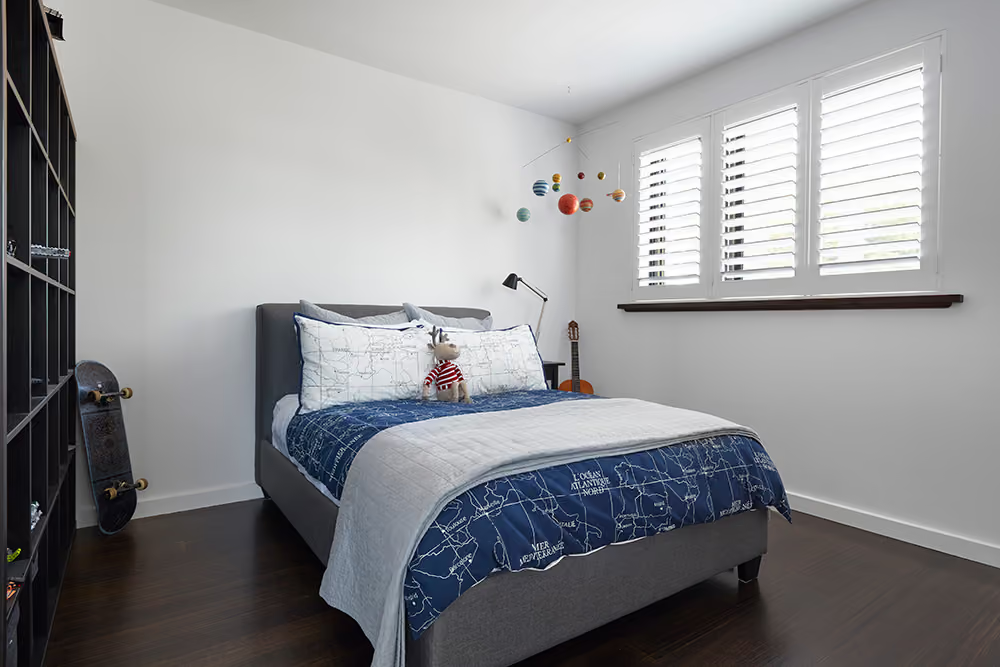
When building a home extension, every design choice affects your return. Some features consistently deliver stronger ROI, while others can add unnecessary cost without increasing market value.
The key is to renovate with purpose and avoid guesswork. Focus on improvements that buyers recognise and are willing to pay for.
High-impact features that add value:
- Adding additional bedrooms to increase buyer demand and resale potential
- Including extra bathrooms to improve functionality and convenience
- Creating open-plan living zones that feel modern and spacious
- Enhancing storage and layout efficiency for everyday practicality
- Improving indoor-outdoor flow to suit Australian lifestyles
- Designing flexible spaces that adapt to evolving needs
- Maintaining quality workmanship to protect long-term value
Before you build an extension, it’s important to factor in building costs, compliance requirements and permits. A well-managed extension project, from quote to completion, ensures your investment adds value rather than unnecessary additional cost.
How much does it cost to add onto a house in Australia?
The cost to add to a house in Australia depends on the type of extension, its size, and how complex the construction is.
Ground floor extensions are often more cost-effective because they involve less structural work, whereas a second storey extension typically requires reinforcing the existing home and working around its structure. Factors such as brick veneer construction, site access and the condition of your existing home can also influence the final price.
Labour is a major part of any extension project, with multiple tradies involved from start to finish. Plumbing, electrical work and internal works all contribute to the overall construction cost, along with materials and finishes. On top of this, permits, approvals and inspections are required to ensure compliance, which adds to the total investment.
Costs can also vary depending on your suburb and local property prices. In higher-demand areas, building costs per square metre may be higher, but so is the potential return. While the upfront investment can seem significant, many homeowners find extending is still more cost-effective than moving, especially when you factor in agent fees, stamp duty and relocation expenses.
How much value a home extension can add to your property
A well-planned home extension can significantly increase your property’s overall value, particularly when it improves usable living space and layout. In many cases, a quality house extension can add around 10-20% to your home’s market value, depending on the design, location and level of finish.
The return on investment is closely linked to what buyers are looking for in your area. Additional bedrooms, modern living spaces, and improved flow tend to have the greatest impact on resale prices and property appraisals. When your home extension aligns with local demand, it becomes a strong selling point rather than just an upgrade.
It is also important to consider how the extension fits within your suburb. Overbuilding beyond the average property value in your area can limit your return, while a well-matched design can position your home competitively against neighbouring properties. Buyers often compare homes step by step, so functionality and presentation play a key role in perceived value.
For many homeowners, extending offers a way to increase value rather than sell and re-enter the market. When executed with quality workmanship and a clear strategy, a home extension can deliver both immediate lifestyle benefits and a measurable financial return.
How to avoid overcapitalising when adding on to your home
Overcapitalisation happens when the cost of your extension exceeds the value it adds to your property. The key to avoiding it is careful budget planning for renovations and understanding your local market before you build.
Follow this step-by-step checklist to stay on track:
- 01

Research your local market and value ceiling
Look at recent sales in your suburb to understand the maximum value buyers are willing to pay. This sets a realistic limit for your project.
- 02
Set a clear renovation budget early
Define your total budget before starting design. Include construction, permits and a buffer for unexpected costs.
- 03
Prioritise value-adding features
Focus on improvements buyers want, such as additional bedrooms, bathrooms and functional living space. Consider both your current needs and future market appeal.
- 04
Avoid overbuilding for your area
A high-end extension in a modest suburb may not deliver the return you expect. Keep your design aligned with surrounding homes.
- 05
Get a detailed quote before building
Working with an experienced builder helps reduce guesswork and ensures costs are clearly defined from the start.
- 06
Plan your extension with cost control in mind
Choose materials and finishes that balance quality and budget, rather than overspending on unnecessary upgrades.
Key design choices that increase your home extension value
The design of your extension plays a major role in how much value it adds. Thoughtful decisions can maximise functionality, improve comfort and increase buyer appeal when it comes time to sell.
Key design choices that make the biggest impact:
- Maximise natural light: Large windows, skylights and well-positioned openings make spaces feel brighter, larger and more inviting.
- Create a functional, flowing layout: A well-planned floor plan improves how your home is used every day and makes it more appealing to buyers.
- Prioritise energy efficiency: Quality insulation, orientation and ventilation help reduce energy use and improve long-term comfort.
- Choose durable, high-quality materials: Materials that balance durability and style support long-term value and reduce maintenance.
- Match the architectural style of your home: A seamless extension that complements your existing home improves overall presentation and marketability.
- Design for indoor-outdoor living: Connecting internal spaces to outdoor areas enhances lifestyle appeal and perceived space.
- Future-proof your design: Flexible spaces that adapt to changing needs attract a wider range of buyers.
- Focus on quality workmanship: Attention to detail ensures your extension looks and performs as expected over time.
Why the Australian property market rewards well-planned extensions
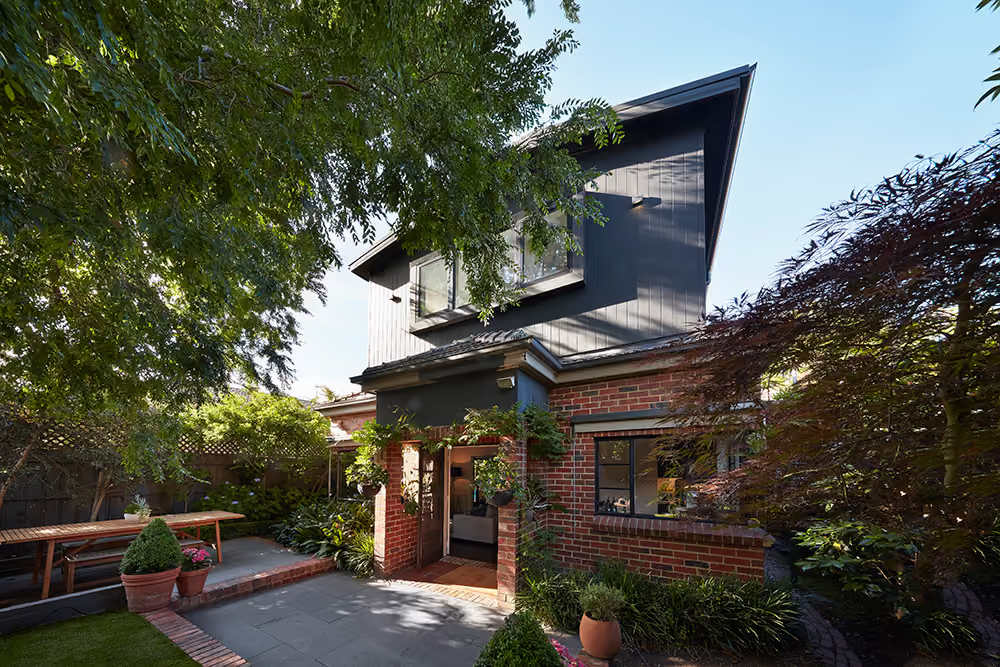
In the Australian property market, well-planned home extensions consistently attract strong buyer demand and higher resale prices. This is largely driven by the needs of family buyers, who prioritise space, functionality and move-in-ready homes.
Properties that offer additional living space, modern layouts and improved flow are often more competitive than similar homes without these upgrades. A thoughtfully designed extension increases marketability by making the home more practical for everyday living, which directly influences how buyers perceive its value.
There is also a growing trend of homeowners choosing to extend rather than sell, particularly in established suburbs where location is highly valued. This has raised expectations among buyers, who now look for homes that already offer the space and features they need.
When a house extension is well executed, it supports capital growth by aligning with market demand. On the other hand, poorly planned additions can do more harm than good, especially if they don’t suit the property or the surrounding area.
Home extension FAQs
Do I need council approval for a home extension?
Yes, most home extensions in Australia require council approval and permits before construction begins. Planning requirements vary depending on your suburb, the size of the extension and how it impacts neighbouring properties. Working with an experienced builder helps ensure all approvals and compliance are managed correctly, so your house extension adds value rather than delays.
How long does a home extension take to complete?
Timelines may depend on the project's size and complexity. On average, a home extension can take anywhere from three to nine months to build, not including planning and approval stages. Larger or more complex builds, such as double-storey extensions, may take longer due to additional trade coordination and structural requirements.
How much disruption should I expect during construction?
Some disruption is unavoidable, especially during structural work and internal changes. However, a well-managed project will minimise impact where possible. Many builders plan construction in stages to reduce disruption to your daily routine and manage different trades efficiently.
How much does it cost to build a home extension?
Costs may vary depending on design, size, and materials. A detailed, comprehensive quote is the best way to understand the costs specific to your home and avoid unexpected expenses during the build.
Do I need to move out during the build?
Not always. Whether you need to move out depends on the type of work being carried out and whether you'll have access to essential amenities like a kitchen and bathroom during the build. If these remain usable, you may be able to stay in your home. If not, temporary accommodation may be the best option until construction is complete.
How do I choose the right builder for my extension?
Look for builders with experience in home extensions, clear processes and strong client reviews. It’s important to choose a team that can handle the project from planning through to completion, including approvals and construction. The right builder ensures your house extension adds long-term value without unnecessary cost or risk.

Thinking about adding an extension to your home?
Start with a free, no-obligation consultation with Supa Group. Our specialised team will walk you through your options, costs and design ideas, so you can make confident decisions from the very beginning.
How does a home extension add value to your property?
Adding an extension to your house is one of the most effective ways to improve your living space while increasing long-term property value. The key is working with a home extension builder who understands how to balance design, construction and market expectations.
At Supa Group, we guide homeowners through every stage of the process, from initial planning and approvals to construction and completion. Our integrated design and construct approach ensures your extension is not only functional and well-built, but also aligned with your budget and local market. You can also explore our process to see how we manage each project from start to finish.
If you're ready to extend your home with confidence, Supa Group can help you create a space that adds real value now and into the future.